
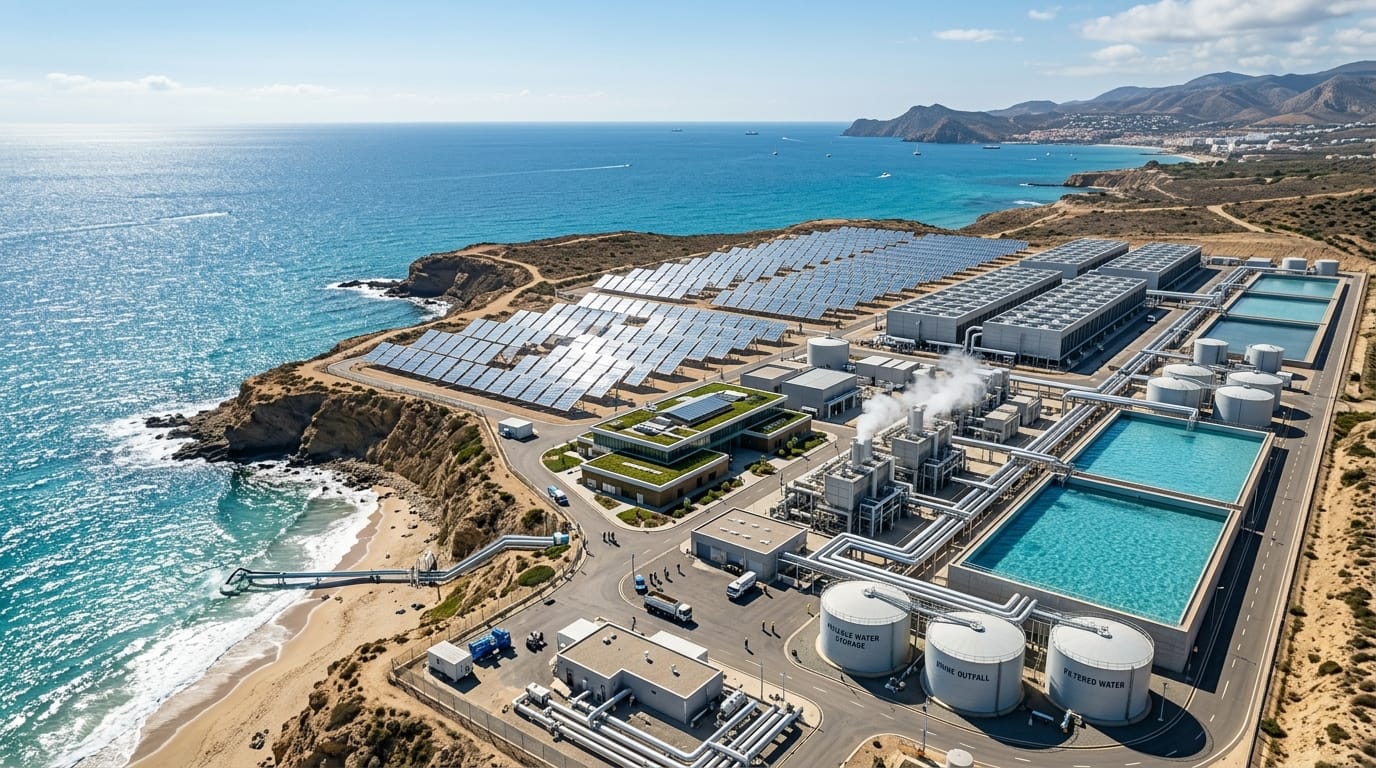
Turning Sunlight Into Drinking Water: The Solar Desalination Breakthrough That Could Solve the Global Water Crisis
A revolutionary solar-powered desalination technology is turning seawater into drinking water using only sunlight, offering a sustainable solution to global water scarcity.
Quick Facts Box
Category: Environment & Sustainability
Published Date: June 2026
Reading Time: 10 Minutes
Author: MetaGlideHub Editorial Team
Introduction
Imagine a future where clean drinking water is produced directly from the ocean using nothing more than sunlight.
While this may sound like science fiction, researchers in South Korea have developed a breakthrough solar-powered desalination technology that could transform the way humanity addresses freshwater shortages.
As climate change intensifies droughts, population growth increases demand, and freshwater resources become more strained, access to safe drinking water is emerging as one of the most urgent global challenges. Traditional desalination plants provide an important solution, but they often consume massive amounts of electricity and rely heavily on fossil fuels.
Now, a new generation of solar desalination technology promises to change that equation.
By converting seawater into freshwater using only sunlight, this innovation could help communities, cities, and nations build more resilient and sustainable water systems for the future.
Table of Contents
- Why Water Scarcity Is Becoming a Global Crisis
- How Traditional Desalination Works
- The South Korean Solar Desalination Breakthrough
- Why Salt Buildup Has Been a Major Challenge
- Environmental Benefits of Solar-Powered Desalination
- Potential Applications Around the World
- Challenges That Still Need Solving
- The Future of Water Security
- FAQ
- Key Takeaways
Why Water Scarcity Is Becoming a Global Crisis
Freshwater represents only a small fraction of Earth’s total water supply. While oceans cover more than 70% of the planet, most of that water is too salty for human consumption.
Several factors are making water shortages worse:
Population Growth
The world’s population continues to increase, creating greater demand for drinking water, agriculture, and industrial use.
Climate Change
Rising temperatures are intensifying droughts, reducing rainfall in many regions, and disrupting traditional water supplies.
Urbanization
Growing cities require vast amounts of water infrastructure, often placing pressure on already stressed resources.
Agricultural Demand
Agriculture accounts for approximately 70% of global freshwater withdrawals, making efficient water management increasingly critical.
As a result, billions of people now live in regions experiencing moderate to severe water stress.
How Traditional Desalination Works
Desalination is the process of removing salt and other minerals from seawater to make it safe for drinking.
Most modern facilities rely on:
Reverse Osmosis
Water is forced through specialized membranes under extremely high pressure, separating freshwater from salt.
Thermal Desalination
Seawater is heated and evaporated before being condensed into freshwater.
While effective, both methods require substantial energy consumption.
This leads to:
- High operational costs
- Significant carbon emissions
- Dependence on electricity infrastructure
- Increased environmental impact
For many developing regions, these limitations make large-scale desalination difficult to deploy.
The South Korean Solar Desalination Breakthrough
Researchers have introduced a highly innovative system that uses advanced photothermal materials to harness solar energy more efficiently.
Instead of relying on external electricity, the technology directly converts sunlight into heat.
How It Works
Step 1: Solar Absorption
Specialized photothermal materials rapidly capture solar radiation and convert it into heat.
Step 2: Accelerated Evaporation
The absorbed heat causes seawater to evaporate efficiently.
Step 3: Freshwater Collection
Water vapor is condensed into clean, drinkable freshwater.
Step 4: Salt Management
A specially engineered structure prevents salt accumulation, maintaining long-term performance.
The entire process operates with minimal external energy requirements, significantly reducing costs and emissions.
Why Salt Buildup Has Been a Major Challenge
One of the biggest obstacles facing solar desalination systems has been salt accumulation.
When salt crystals build up on evaporation surfaces:
- Efficiency declines
- Water production decreases
- Maintenance costs rise
- System lifespan shortens
The South Korean innovation addresses this issue through an advanced design that continuously manages salt distribution.
This allows the system to maintain high efficiency over extended operating periods.
The breakthrough could significantly improve commercial viability and scalability.
Environmental Benefits of Solar-Powered Desalination
Reduced Carbon Emissions
Unlike conventional desalination plants powered by fossil-fuel-generated electricity, solar systems operate using renewable energy.
Lower Energy Consumption
Direct solar evaporation eliminates many energy-intensive processes used by traditional facilities.
Sustainable Water Production
Communities gain access to freshwater without increasing greenhouse gas emissions.
Enhanced Climate Resilience
Regions vulnerable to drought can develop more reliable water sources.
Reduced Infrastructure Requirements
Remote coastal communities may gain access to freshwater without expensive grid connections.
Potential Applications Around the World
The implications extend far beyond research laboratories.
Coastal Cities
Rapidly growing urban populations can supplement existing water supplies.
Island Nations
Small islands often face severe freshwater limitations despite being surrounded by ocean water.
Disaster Relief Operations
Portable solar desalination systems could provide emergency drinking water after natural disasters.
Rural Communities
Off-grid regions could gain sustainable freshwater access without requiring major infrastructure investments.
Agriculture
Future systems may help support irrigation in water-scarce environments.
Why This Matters for the United States
Water challenges are no longer limited to developing nations.
Several regions across the United States are already experiencing increasing pressure on water resources.
Examples include:
- California drought conditions
- Colorado River water shortages
- Growing demand in Southwestern states
- Rising climate-related water stress
Solar-powered desalination could become an important tool for improving long-term water security while supporting clean-energy goals.
As renewable energy technologies continue to advance, integrating water and energy solutions may become a cornerstone of future infrastructure planning.
Challenges That Still Need Solving
Although promising, several challenges remain.
Large-Scale Deployment
Researchers must demonstrate commercial-scale operation.
Manufacturing Costs
Advanced materials must become affordable for widespread adoption.
Water Output Capacity
Systems need to meet the demands of large populations.
Long-Term Durability
Performance must remain stable over years of operation.
Policy and Investment
Governments and private investors will play a critical role in accelerating deployment.
Despite these hurdles, the technology represents a significant step forward.
The Future of Water Security
The next decade may witness a fundamental transformation in how humanity produces freshwater.
Renewable energy technologies are already reshaping electricity generation.
Now, they are beginning to revolutionize water infrastructure.
Future developments may include:
- Solar-powered desalination farms
- Floating freshwater production systems
- Smart water-energy networks
- Autonomous desalination technologies
- Climate-resilient water infrastructure
The intersection of clean energy and water security is rapidly becoming one of the most important frontiers in sustainability.
What once seemed impossible is becoming increasingly achievable.
Sunlight, one of Earth’s most abundant resources, may soon help provide one of humanity’s most essential needs.
Statistics & Research
According to research from:
- United Nations (UN)
- World Health Organization (WHO)
- International Energy Agency (IEA)
- World Bank
Key Findings
- More than 2 billion people experience water stress worldwide.
- Climate change is increasing drought frequency and severity.
- Desalination demand is expected to grow significantly over the coming decades.
- Renewable energy adoption continues accelerating globally.
- Sustainable water infrastructure investment is increasing across industries.
Expert Insights
The most significant aspect of this innovation is not simply desalination itself.
The true breakthrough lies in integrating renewable energy directly into critical infrastructure.
Historically, clean energy discussions focused primarily on electricity generation.
Today, renewable technologies are expanding into transportation, agriculture, manufacturing, and now water production.
This shift demonstrates that climate solutions can simultaneously address multiple global challenges.
Solar-powered desalination may eventually become a cornerstone technology for sustainable development in the 21st century.
Internal Links
Suggested MetaGlideHub Articles:
- The Future of Renewable Energy Technologies
- How Climate Change Is Reshaping Global Infrastructure
- Top Sustainability Innovations Changing the World
- Green Technology Trends for 2030
- Water Conservation Strategies for Modern Cities
External References
- United Nations Water Program http://unwater.org
- World Health Organization http://who.int
- International Energy Agency http://iea.org
- World Bank Water Resources Program http://worldbank.org
Frequently Asked Questions
What is solar-powered desalination?
It is a technology that converts seawater into freshwater using solar energy instead of traditional electricity-intensive processes.
Why is desalination important?
It provides an alternative freshwater source for regions experiencing water scarcity.
How does the new South Korean system work?
It uses advanced photothermal materials to absorb sunlight, generate heat, evaporate seawater, and collect freshwater.
What makes this breakthrough different?
The system effectively prevents salt buildup, a major challenge in solar desalination.
Is the water safe to drink?
Yes. Proper desalination removes salt and impurities, producing potable water.
Can this technology replace traditional desalination plants?
Not immediately, but it could supplement or eventually reduce reliance on conventional systems.
Which regions could benefit most?
Coastal cities, island nations, drought-prone regions, and off-grid communities.
Does it produce carbon emissions?
The operational emissions are significantly lower compared to conventional desalination systems.
Key Takeaways
- Water scarcity is becoming a global challenge.
- Traditional desalination remains energy-intensive.
- South Korean researchers developed an advanced solar-powered desalination system.
- The technology operates using sunlight alone during operation.
- Innovative salt-management design improves efficiency.
- Lower emissions and operating costs enhance sustainability.
- Applications range from cities to rural communities.
- Renewable energy is increasingly supporting water security.
- Solar desalination could become a major climate solution.
Conclusion
The global water crisis requires bold innovation, sustainable thinking, and scalable solutions.
Solar-powered desalination represents a remarkable step toward a future where clean drinking water can be produced using one of Earth’s most abundant resources: sunlight.
As climate pressures continue to grow and freshwater supplies face increasing strain, technologies like this could play a vital role in safeguarding communities, strengthening resilience, and supporting sustainable development.
The future of clean energy is no longer limited to powering homes and businesses. It may soon help provide the water that sustains life itself.
Author Bio
MetaGlideHub Editorial Team
The MetaGlideHub Editorial Team covers emerging technologies, sustainability, science, innovation, and global trends. Our mission is to deliver accurate, insightful, and future-focused content for readers worldwide.
Related Posts
- AI-Powered Climate Solutions Transforming the Planet
- Renewable Energy Innovations Shaping the Next Decade
- Smart Cities and Sustainable Infrastructure
- The Future of Water Technology
- Green Technologies Revolutionizing Global Industries
Join the Discussion
Do you think solar-powered desalination could become the future of global water security?
Share your thoughts in the comments below and join the conversation.