
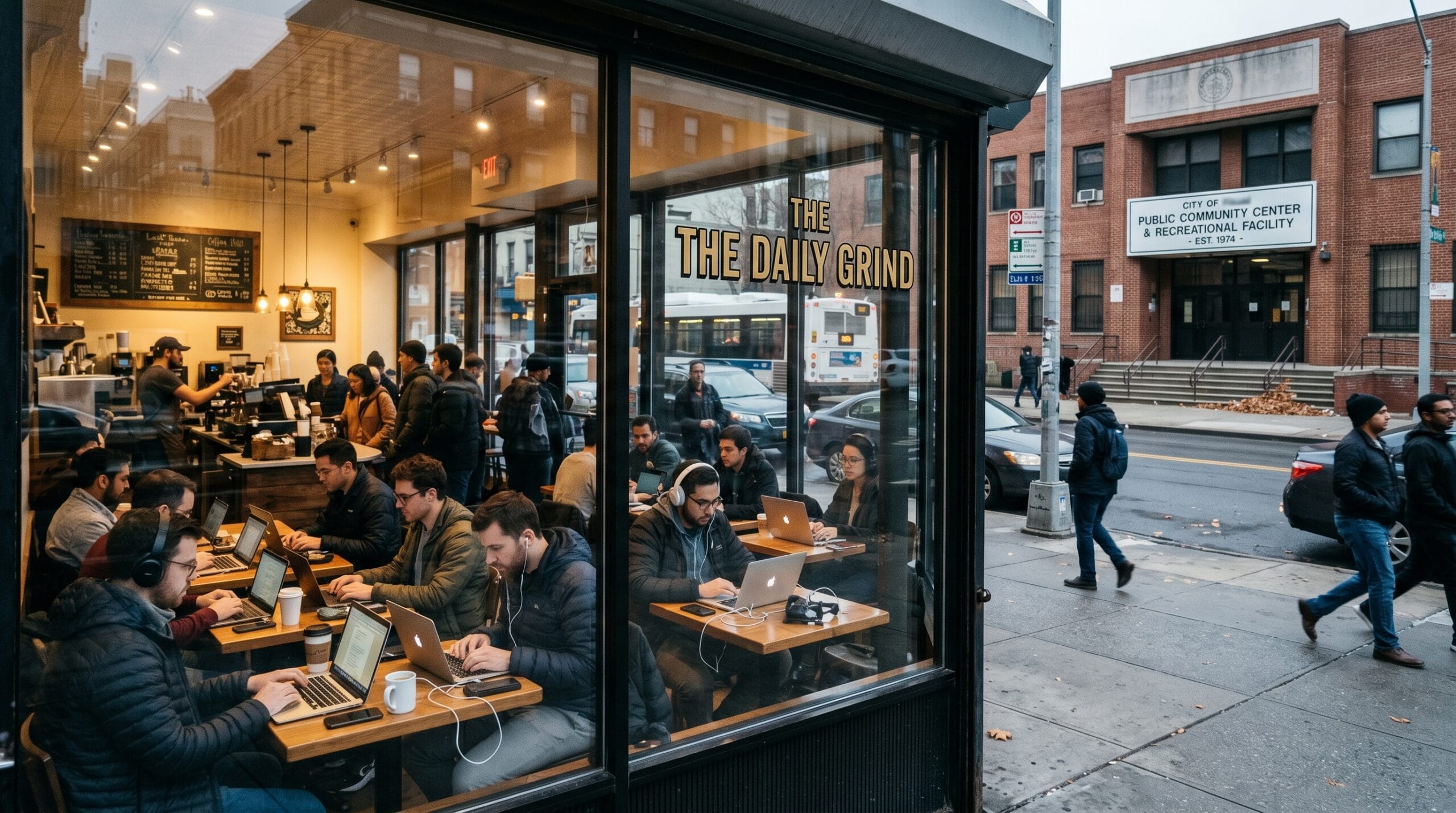
The Third-Place Crisis: Why America Is Losing Its Ability to Exist Without a Transaction
The Third-Place Crisis is reshaping American society. Discover why non-transactional spaces are disappearing and how their loss fuels loneliness, isolation, and social decline.
Introduction
Imagine a world where every moment spent outside your home requires a purchase.
Want to sit somewhere quietly? Buy a coffee.
Need a place to meet friends? Reserve a table.
Looking for community? Subscribe, register, or pay a membership fee.
For millions of Americans, this is no longer a hypothetical scenario—it is reality.
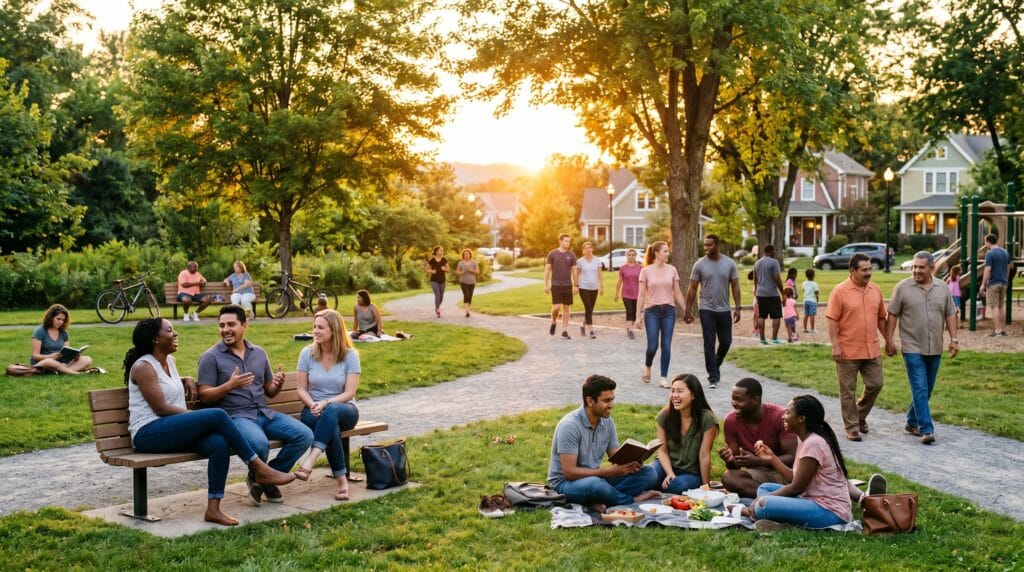
The United States is experiencing what sociologists call the Third-Place Crisis, a profound transformation in how people interact, build relationships, and experience community. Third places—spaces that exist outside home and work—have historically served as the foundation of social life. Libraries, parks, community centers, diners, churches, barbershops, local cafes, and neighborhood gathering spots once provided opportunities for connection without requiring constant spending.
Today, many of these spaces are disappearing.
As public life becomes increasingly transactional, Americans are losing more than physical locations. They are losing opportunities for spontaneous conversations, meaningful friendships, and a sense of belonging.
This article explores why third places matter, why they are disappearing, and what their loss means for the American psyche and society as a whole.
Table of Contents
What Is a Third Place?
Why Third Places Matter
The Slow Disappearance of Public Gathering Spaces
How Everything Became Transactional
The Hidden Cost: America’s Loneliness Epidemic
Digital Spaces Are Not Replacing Community
Economic Forces Driving the Crisis
What Other Countries Are Doing Differently
How Communities Can Rebuild Third Places
The Future of Social Connection
FAQ
Key Takeaways
What Is a Third Place?
The concept of the “third place” was popularized by sociologist Ray Oldenburg.
According to Oldenburg:
First Place = Home
Second Place = Workplace
Third Place = Community Gathering Space
Third places are locations where people gather informally without significant barriers to entry.
Examples include:
Public parks
Libraries
Community centers
Neighborhood cafes
Local diners
Churches
Recreation centers
Bookstores
Town squares
The defining characteristic is simple:
People gather there primarily to connect—not to consume.
Why Third Places Matter
Third places create what sociologists call “social capital.”
These spaces allow people to:
Build trust
Form friendships
Exchange ideas
Reduce loneliness
Strengthen neighborhoods
Improve mental health
Historically, many of America’s strongest communities were built around places where people could simply exist together.
No subscription required.
No purchase necessary.
No algorithm deciding who gets attention.
The Slow Disappearance of Public Gathering Spaces
Over the past several decades, many traditional gathering places have steadily declined.
Several trends contributed:
Suburban Expansion
Car-dependent suburban design reduced walkability.
People increasingly traveled directly between home and work without naturally encountering neighbors.
Retail Transformation
Independent bookstores, diners, and community businesses struggled to compete with large chains and online shopping.
Many local gathering hubs disappeared entirely.
Rising Property Costs
Commercial rents have surged across major American cities.
Businesses often prioritize high-spending customers, making it difficult to maintain welcoming public spaces.
Declining Civic Participation
Membership in civic organizations, clubs, and local groups has fallen significantly compared to previous generations.
Fewer people participate in community-based activities than in the past.
How Everything Became Transactional
One of the most significant shifts in modern society is the growing expectation that every interaction must generate revenue.
Consider modern urban life:
Want to work remotely?
Buy a coffee.
Need Wi-Fi?
Purchase something.
Looking for a social activity?
Buy tickets.
Need a place to sit indoors?
Become a customer.
Many public spaces now operate under an implicit rule:
Presence requires spending.
This subtle change fundamentally alters how people interact with their communities.
Instead of belonging, people become consumers.
Instead of gathering, people purchase experiences.
Instead of participating, people subscribe.
The Rise of Pay-to-Belong Culture
The modern economy increasingly monetizes human connection.
Examples include:
Paid networking groups
Subscription communities
Premium social clubs
Exclusive memberships
Ticketed experiences
While these services provide value, they often exclude individuals with limited financial resources.
Community becomes something purchased rather than shared.
The Hidden Cost: America’s Loneliness Epidemic
The disappearance of third places is closely linked to growing social isolation.
Recent research suggests loneliness has become a major public health concern in the United States.
People are more digitally connected than ever before yet report feeling increasingly disconnected from others.
Why Loneliness Matters
Loneliness affects:
Mental Health
Isolation contributes to:
Anxiety
Depression
Chronic stress
Reduced life satisfaction
Physical Health
Researchers have linked prolonged loneliness to:
Higher blood pressure
Increased inflammation
Sleep disturbances
Cardiovascular risks
Community Stability
Communities with weaker social bonds often experience:
Lower trust
Reduced civic engagement
Increased polarization
The consequences extend far beyond individual well-being.
Digital Spaces Are Not Replacing Community
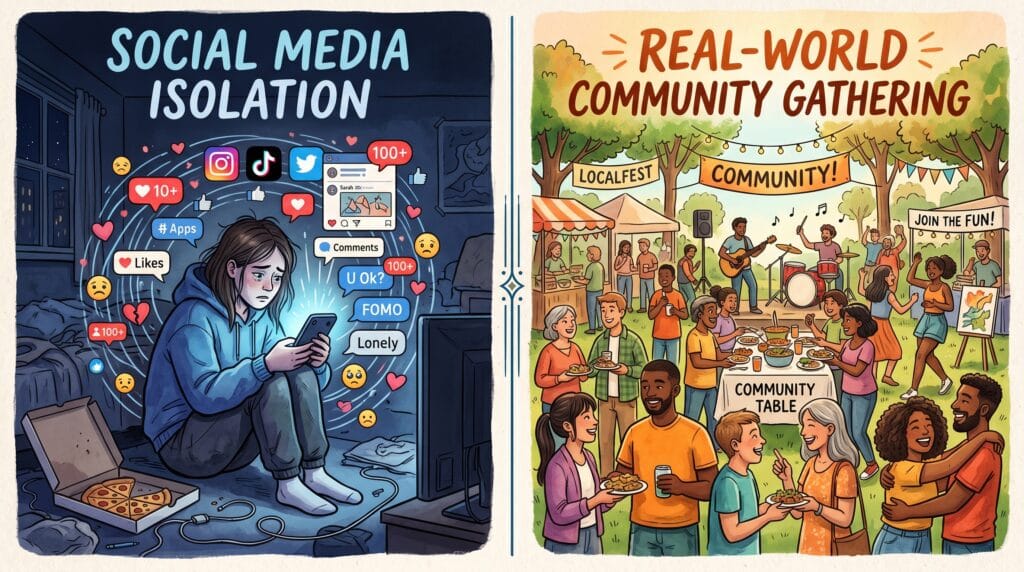
Many assumed social media would replace physical gathering spaces.
That prediction largely failed.
Why?
Because online interaction lacks many elements of real-world connection:
Physical presence
Eye contact
Shared environments
Spontaneous conversation
Local accountability
Digital communities can supplement social life.
They rarely replace it completely.
Scrolling through content is not the same as sitting in a park talking with neighbors.
Participating in a group chat is not identical to sharing a meal.
Human beings evolved in communities—not feeds.
Economic Forces Driving the Crisis
Several economic trends accelerate the Third-Place Crisis.
Commercialization of Public Life
Private businesses increasingly fill roles once held by public institutions.
As a result:
Access often depends on spending
Time limits increase
Commercial objectives dominate
Remote Work and Social Fragmentation
Remote work offers flexibility but can reduce daily social interaction.
Many workers now spend entire days without face-to-face conversations outside family members.
The office, despite its flaws, once served as an important social hub.
Housing and Urban Challenges
High housing costs often force people into longer commutes.
Long commutes reduce time available for community engagement.
People become exhausted, isolated, and disconnected from local neighborhoods.
What Other Countries Are Doing Differently
Some nations continue investing heavily in public gathering spaces.
Examples include:
Scandinavian Countries
Strong investments in:
Public libraries
Community centers
Walkable neighborhoods
Public parks
These spaces encourage social interaction without commercial pressure.
Japan
Many cities maintain vibrant public spaces where residents naturally gather.
Local parks, plazas, and neighborhood districts remain central to daily life.
European Cities
Many urban centers prioritize:
Walkability
Public transportation
Open plazas
Community events
The result is more frequent social interaction and stronger local connections.
How Communities Can Rebuild Third Places
The Third-Place Crisis is not irreversible.
Communities can rebuild social infrastructure through intentional action.
Invest in Public Libraries
Modern libraries serve as community hubs.
They provide:
Free access
Educational resources
Events
Meeting spaces
Libraries remain one of the few truly non-transactional environments available to everyone.
Design Walkable Neighborhoods
People are more likely to connect when they can walk rather than drive everywhere.
Walkability naturally creates social encounters.
Support Local Businesses
Independent businesses often function as informal gathering spaces.
Supporting them helps preserve community identity.
Create More Public Events
Farmers markets, festivals, concerts, and community gatherings encourage meaningful interaction.
These events strengthen local relationships.
Protect Public Spaces
Parks, plazas, and recreational areas should remain accessible and welcoming.
Communities thrive when people can gather without financial barriers.
The Future of Social Connection
The Third-Place Crisis represents one of the most important cultural challenges of the modern era.
Technology, urban design, economics, and shifting social habits have combined to create a world where human connection increasingly comes with a price tag.
Yet the solution may be surprisingly simple:
Create places where people can exist together without needing to buy anything.
Not every interaction should be a transaction.
Not every gathering should be monetized.
Not every relationship should begin with a purchase.
Healthy societies require spaces where belonging is freely available.
The future of community may depend on our willingness to protect those spaces before they disappear entirely.
Statistics & Research
Key Findings
Loneliness is increasingly recognized as a major public health challenge in the United States.
Americans report spending less time in community organizations compared to previous generations.
Walkable communities tend to experience stronger social engagement.
Public libraries remain among the most trusted public institutions in America.
Social connection is strongly associated with improved mental and physical health outcomes.
Sources
World Health Organization (WHO)
U.S. Surgeon General Advisory on Loneliness
Pew Research Center
American Library Association
Brookings Institution
Expert Insights
Social isolation is not merely a personal issue—it is a structural one.
When cities are designed around consumption rather than connection, loneliness becomes a predictable outcome.
Communities flourish when people have opportunities to interact without economic pressure.
The strongest societies are not necessarily those with the highest incomes, but those with the strongest social bonds.
Internal Links
Link to:
The Future of Community in the Digital Age
Why Walkable Cities Improve Mental Health
The Loneliness Epidemic Explained
How Technology Changed Human Relationships
Building Stronger Local Communities
External References
U.S. Surgeon General
World Health Organization
Pew Research Center
Brookings Institution
American Library Association
Frequently Asked Questions
What is a third place?
A third place is a social environment outside home and work where people gather informally and build community.
Why are third places disappearing?
Rising costs, urban design changes, commercialization, and declining civic participation all contribute to their decline.
How does the loss of third places affect mental health?
It increases loneliness, social isolation, anxiety, and reduced feelings of belonging.
Can social media replace third places?
No. Online interactions lack many qualities of in-person human connection.
Are libraries considered third places?
Yes. Libraries are among the most important remaining non-transactional gathering spaces.
Why are third places important for democracy?
They encourage dialogue, trust, civic engagement, and stronger community relationships.
What can cities do to restore third places?
Invest in public spaces, libraries, parks, walkability, and community events.
Are third places only important for older adults?
No. People of all ages benefit from social connection and community engagement.
Key Takeaways
Third places are disappearing across America.
More public interactions now require spending money.
The loss contributes to loneliness and social isolation.
Digital platforms cannot fully replace physical communities.
Walkable neighborhoods strengthen social bonds.
Libraries remain critical community hubs.
Rebuilding third places can improve societal well-being.
Human connection should not require a transaction.
Conclusion
America’s Third-Place Crisis is not simply about cafes, parks, or libraries. It is about the gradual disappearance of spaces where people can belong without being customers.
As society becomes increasingly transactional, the value of non-commercial community spaces becomes even more important.
The challenge ahead is not just rebuilding physical places—it is rebuilding a culture that values connection over consumption.
The future of social health may depend on preserving places where people can simply gather, talk, and exist together.
What do you think? Has your community lost its third places, or are there still spaces where people can connect without spending money? Share your thoughts in the comments below.
Related Posts
The Loneliness Economy: Why Isolation Is Becoming Big Business
The Future of Human Connection in an AI World
Why Walkable Cities Create Happier Communities
The Hidden Psychology of Social Media Addiction
How Urban Design Shapes Mental Health
Comment Section
Have you noticed fewer places where people can gather without spending money?
Share your experiences, ideas, and solutions in the comments.